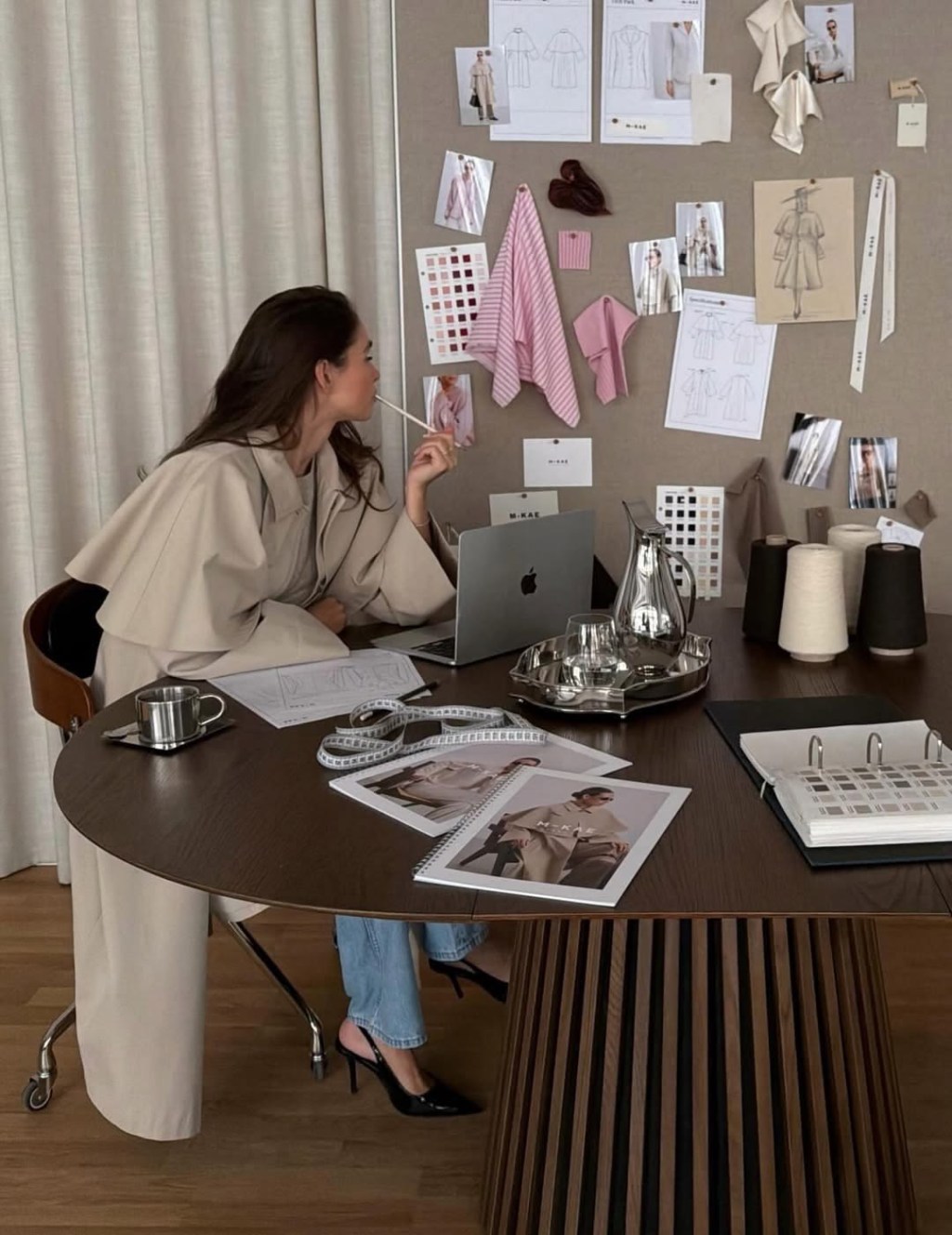
When people hear “fashion career,” they might immediately think of fashion design, modeling, or styling. But fashion is so much more than designing clothes. The industry brings together business, art, media, entertainment, marketing, communication, and creativity.
You also don’t have to know how to sew or draw to have a career in fashion. There are so many different paths in fashion, and they don’t all look the same.
For someone who is creative and loves putting ideas together, there are careers like fashion design, styling, textile design, fashion illustration, and costume design. A fashion designer creates clothing, while a textile designer works with fabrics, patterns, and prints. A costume designer uses clothing to help tell stories through theater, television, or film. A stylist takes clothing, accessories, and other details and turns them into a complete look that fits a specific vision.
But what if you’re more interested in people and communication?
Fashion has careers in public relations, journalism, marketing, and media too. A marketing manager can create campaigns that promote a brand and attract customers. A PR specialist works with the media and helps shape how a brand is presented to the public. A fashion copywriter creates advertisements, campaign messages, website content, and other writing that communicates a brand’s ideas.
And then there is the business side of fashion. A fashion buyer decides what clothing and accessories a store should carry, balancing trends, customer demand, price points, and the brand’s identity. A merchandiser helps decide how products are presented, priced, and sold, using sales data and customer behavior to make decisions. A brand manager focuses on a company’s strategy and overall image.
Fashion needs business-minded people just as much as it needs creative ones.
For people who enjoy leadership and seeing the bigger picture, creative direction can be another path. A creative director doesn’t necessarily design the clothing themselves. Instead, they help decide what a brand should look and feel like. They can develop concepts for campaigns, decide on visual identities and color schemes, help plan clothing lineups and photoshoots, and shape how a brand presents itself.
But a creative director is rarely working alone. They might work with photographers, models, stylists, graphic designers, makeup artists, marketers, and producers to bring one idea together. What the public sees might only last a few seconds, but there can be an entire team behind that moment.
A fashion show is one of the best examples of this.
When someone watches a runway show, they might only see the models walking down the runway. What they don’t see is everything happening behind the scenes. Fashion show producers organize the event, creative directors create the vision, stylists plan the looks, hair and makeup artists create the models’ appearances, and backstage coordinators make sure everything stays on schedule. Lighting, music, set design, casting, advertising, and public relations all become part of the production too.
A runway show might only last a few minutes, but those few minutes can represent months of planning. Every person has a different job, but all of those jobs come together to create one final moment.
And that is what makes fashion so interesting. You can be part of creating something without being the person who designed the clothes.
Fashion careers also don’t have to stay in one category. Someone might start in marketing and eventually move into brand management or creative direction. Someone else might combine styling with photography, event production, social media, or PR. The different parts of fashion often overlap, which means you can build a career around more than one interest.
Fashion is not simply about clothing. It is about vision, storytelling, creativity, communication, business, entertainment, and bringing ideas to life.
Instead of asking, “What is the one career I can have in fashion?” maybe the better question is, “What are my strengths, and how can I use them in fashion?”
The possibilities are as diverse as the people who choose to be part of the industry.


Leave a Reply